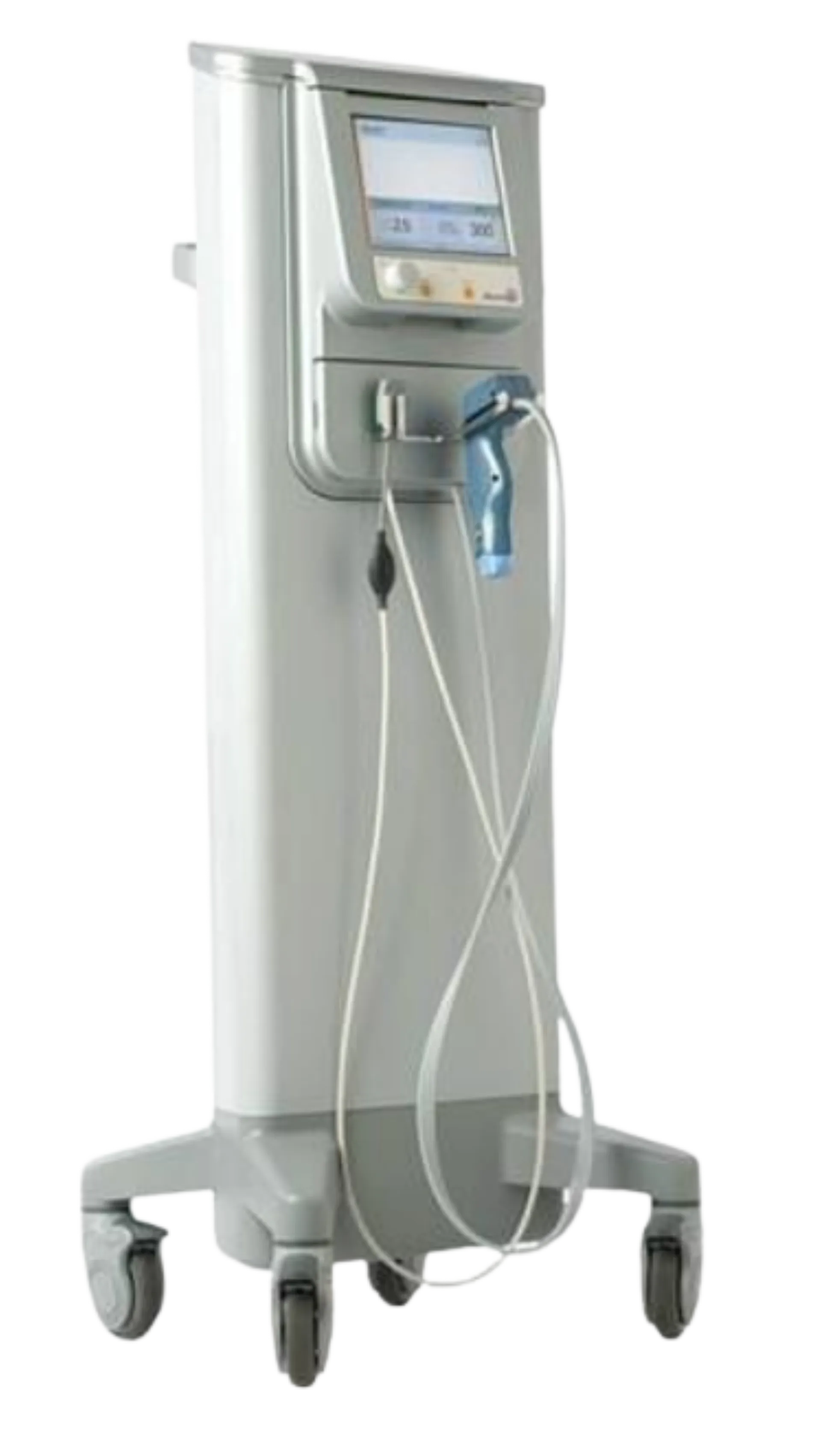
FDA and KFDA Regulatory Status of Thermage FLX
Thermage FLX received FDA 510(k) clearance in 2018 for non-invasive treatment of periorbital wrinkles and rhytids, as well as temporary improvement in the appearance of cellulite. The Korean Ministry of Food and Drug Safety (MFDS, formerly KFDA) approved the device under its Class III medical device classification. This dual regulatory approval means the device has undergone rigorous safety and efficacy evaluation in both American and Korean frameworks. Only clinics using genuine Solta Medical Thermage FLX systems with verified tip counts deliver the validated safety profile established during clinical trials.
The AccuREP (Accurate Repetition) technology introduced with the FLX platform represents a meaningful safety advancement. Each pulse is automatically tuned based on real-time impedance feedback from the tissue, preventing energy over-delivery to any single area. This replaces the manual calibration required in older Thermage CPT systems, reducing operator-dependent variability and lowering the risk of thermal burns.
Common Side Effects and Their Duration
Expected Transient Effects
The most frequently reported side effects are mild redness and slight swelling at the treatment site, occurring in approximately 85-90% of patients. These resolve within 2-4 hours for most individuals. A warm or tingling sensation may persist for 24-48 hours. Tenderness to touch affects roughly 15-20% of patients and typically subsides within 3-5 days. These responses indicate normal tissue heating and collagen denaturation at the target depth of 2-4mm.
Uncommon Adverse Events
Rare side effects reported in fewer than 1% of clinical trial participants include temporary numbness, small surface irregularities, and nodule formation. Burns or blistering are extremely uncommon when the device is operated by trained practitioners following manufacturer protocols. A 2019 multicenter study involving 309 patients documented zero cases of permanent scarring or pigmentation changes. Hsu TS et al. Dermatol Surg. 2019;45(12):1553-1561. doi:10.1097/dss.0000000000001923
Contraindications for Thermage FLX Treatment
Absolute contraindications include active electronic implants such as pacemakers or defibrillators, as radiofrequency energy can interfere with device function. Metal implants within the treatment area, including dental implants in the jawline zone, require case-by-case evaluation. Pregnancy and active skin infections at the treatment site are standard exclusions. Patients with a history of keloid scarring should proceed with caution, as the thermal injury may trigger abnormal scar tissue formation in predisposed individuals.
Relative contraindications include recent injectable treatments within 2-4 weeks, active inflammatory skin conditions such as rosacea flares or eczema, and use of isotretinoin within the previous 6 months. Patients with Fitzpatrick skin types I-VI can safely undergo Thermage FLX treatment, making it suitable for all ethnic backgrounds without increased risk of post-inflammatory hyperpigmentation.
How to Verify Clinic Qualifications in Korea
Qualified clinics in Korea display a valid MFDS medical device registration for their Thermage FLX system. Practitioners should hold a Korean medical license and demonstrate specific training in radiofrequency device operation. Solta Medical maintains an authorized provider network; patients can verify clinic status through official channels. Key indicators of a qualified practice include use of genuine single-use treatment tips with holographic verification stickers, real-time shot count displays visible to the patient, and documentation of the practitioner's device-specific training certification.
RE:BERRY clinics in Korea employ aesthetic medicine specialists who complete manufacturer-certified training programs. During consultation, a qualified practitioner assesses skin laxity grade, reviews medical history for contraindications, and establishes realistic outcome expectations based on the patient's tissue characteristics and age.
Long-Term Safety Profile and Clinical Evidence
Longitudinal data spanning 10+ years of Thermage technology use show no evidence of cumulative tissue damage from repeated treatments at standard intervals of 12-18 months. The controlled thermal injury stimulates type I and type III collagen synthesis without disrupting the epidermis. Histological studies confirm organized neocollagenesis at 3-6 months post-treatment with no fibrotic changes. Alam M et al. JAMA Dermatol. 2013;149(2):204-209. doi:10.1001/jamadermatol.2013.895
Annual maintenance sessions do not increase complication rates. The radiofrequency energy dissipates within milliseconds of each pulse, leaving no residual energy in tissue. This distinguishes Thermage FLX from ablative procedures that remove surface tissue, conferring a significantly lower risk profile for patients who require ongoing treatment to maintain results.